
Overview
During my time at Pega, the search landscape was changing quickly. AI was beginning to reshape how people discovered and researched enterprise software, creating new challenges and opportunities for organic growth.
My focus was on evolving our SEO program to meet those changes. That meant building an AEO/GEO program from scratch, rethinking how we created content, and working across teams to make organic growth more scalable and effective.
Building a GEO practice from scratch
There wasn't much of a playbook for GEO when we started (frankly, there still isn't).
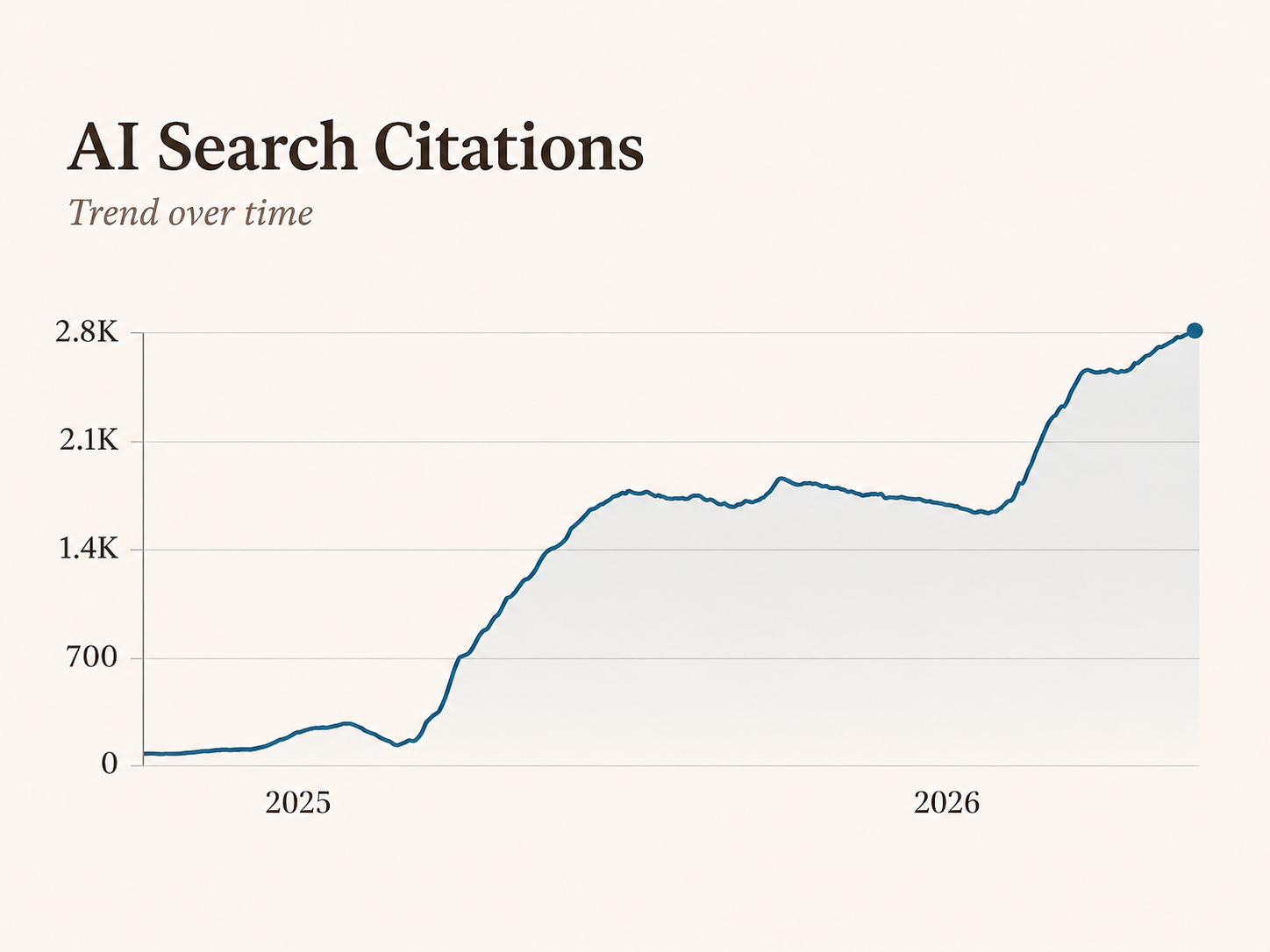
The first step was figuring out what to measure. Traditional rankings and traffic only told part of the story. We needed to understand where Pega appeared in AI-generated answers, which sources influenced those answers, and how we compared with competitors.
From there, I developed a strategy around three areas:
- Owned on and offsite content: Identifying gaps in our coverage and creating content that better represented Pega's products and expertise.
- Earned media: Working with internal teams and agency partners to improve visibility across relevant third-party sources.
- Technical SEO: Partnering with web and engineering teams to improve site health, structure, and discoverability for human and agentic users.
I also built reporting to help leadership make sense of a rapidly evolving space and understand where we should focus our efforts.
The program helped increase visibility across priority AI search prompt categories by ~40% in 2025–2026.
Rethinking content operations
One of our biggest challenges was simply getting content published.
Pega operates in a highly technical space. Creating useful content requires input from subject-matter experts, product marketing, and other teams. Getting a new page live could take months.
I built a new content program combining that expertise with AI-assisted workflows. The idea wasn't to replace subject-matter experts with AI-generated content. It was to make better use of their time and remove the bottlenecks that slowed everything down.
We increased new-page output tenfold and reduced publishing timelines from months to days.
Strengthening organic performance
Alongside the GEO work, I continued developing our traditional SEO program.
We focused on technical health, content quality, and better alignment with business priorities. I worked closely with web and engineering teams, managed agency/vendor relationships, and regularly presented performance and recommendations to senior leadership.
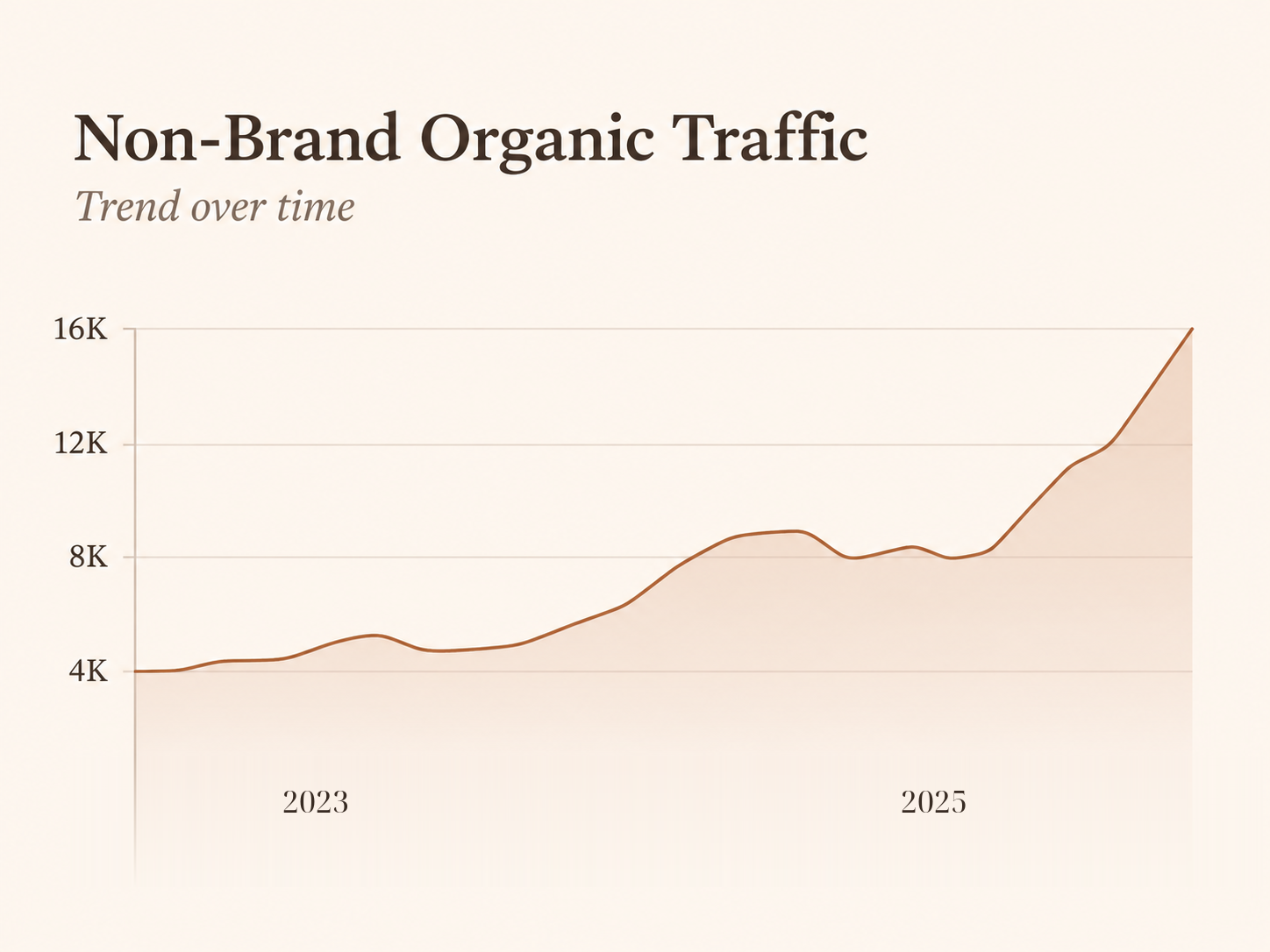
These efforts contributed to 20%+ year-over-year growth in organic traffic and a similar lift in organic-sourced pipeline in 2024–2025. Thanks to content and technical efforts, we started ranked on page 1 of Google search for competitive, technical terms that the business had never been able to crack previously.
The bigger picture
The most interesting part of this work wasn't any single metric.
It was figuring out how to build an organic growth program that could adapt as search changed. Bringing together traditional SEO, AI search, technical expertise, and more efficient content operations.
The tools and tactics will keep evolving. My goal is to build something that can evolve with them.